Why real estate agents switch brokerages: 6 reasons from Courted research
Key points: why real estate agents switch brokerages
- Agent moves slowed in 2026: from January to September, the top 100 brokerage brands recruited $176.6 billion in production, down 31% from $257.1 billion in the same months of 2025, according to Courted's data on real estate recruiting trends in 2026.
- With less production changing hands, brokerage leaders need to be clear on two things: why agents leave, and what value their brokerage offers that agents can't get anywhere else.
- Courted's research on why agents move found that pay and splits are major drivers, but in many cases, support, cultural fit and belonging mattered as much or more.
Real estate agents don't switch brokerages on a whim. Instead, they leave when something important is missing, like a culture where they feel known or a broker who has their back when a deal goes sideways. Here's what agents who had just moved told Courted, and how brokerages can give agents a reason to stay.
Why do real estate agents switch brokerages?
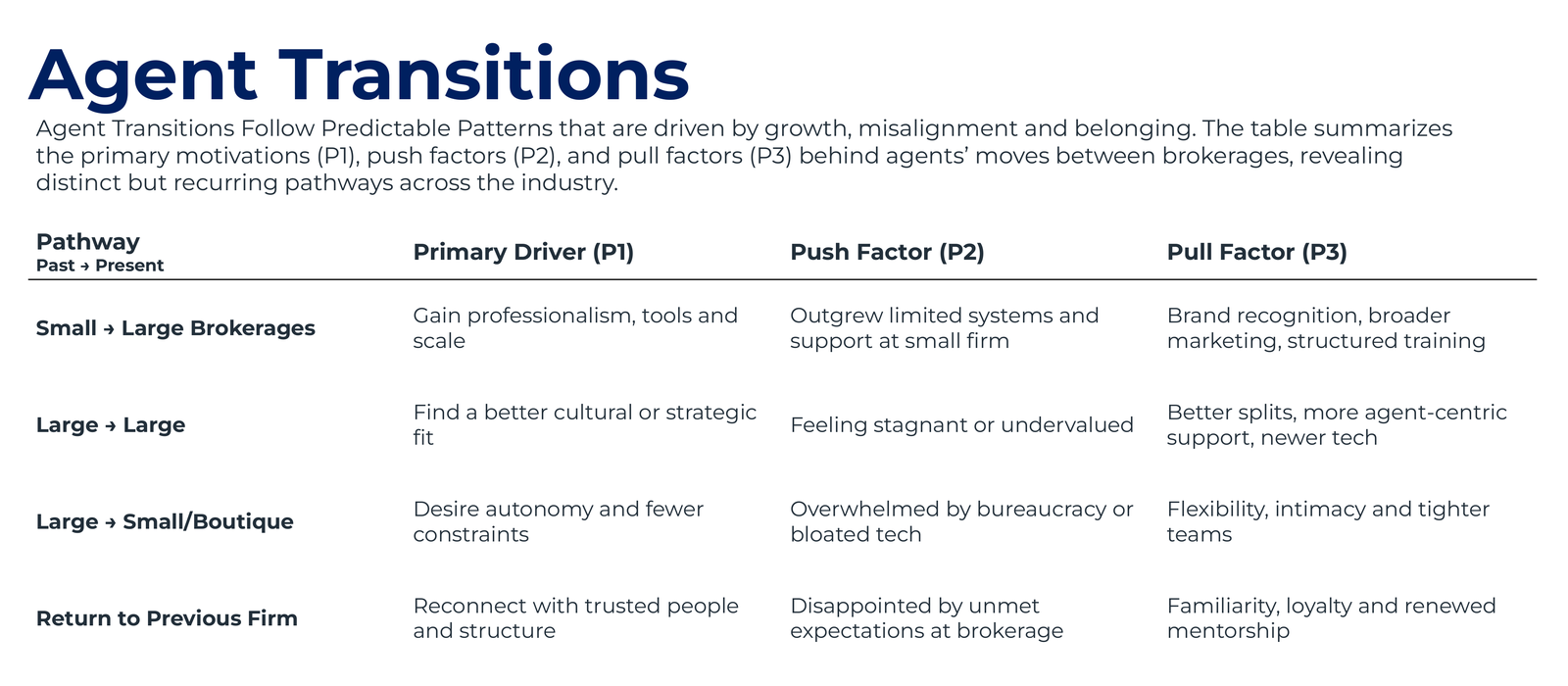
Courted grouped the reasons agents gave into six categories. The first three – belonging, leadership, and support – mattered most.
- The agent didn’t feel a sense of belonging. Agents described brokerages where they felt like "just a number," and feeling valued mattered more than a brokerage's brand or size.
- The agent's manager or broker was out of reach. One agent said: "The brokerage felt very large and impersonal, and I think I might have only communicated with my broker 10 times in 13 years."
- No one was in the agent's corner when a deal went sideways. When a client is angry or a deal falls apart, agents need someone in their corner, and feeling unsupported in those moments pushes them out.
- The agent stopped growing. Agents who moved between large brokerages felt stagnant or undervalued, which is why helping agents grow is central to retention.
- The agent felt they were paying for things they didn't use. "They raised my cap by $8K and I never used the office," one agent said.
- Tech became a burden for the agent. Too many tools, or tools with gaps, became a reason to leave: "Branded tools didn't necessarily help me," one agent said.
Is pay the main reason agents switch brokerages?
Pay is one of the biggest reasons, so brokerages need sensible, competitive commission plans, but in many cases, support, cultural fit and belonging mattered as much as pay, or more.
What are the warning signs an agent might leave?
Agents disengage long before it shows up in their production, losing connection, morale and motivation while they quietly plan their exit.
Courted Talent Solutions flags agents who may be at risk of leaving, based on signals like production vs. their peers and market and competitive factors, so managers know who to call.
How do you retain real estate agents?
Retaining your agents requires using data and tools to your advantage, checking in with agents when it matters most, and creating scarce value.
Use data and tools to your advantage
Automate the administration, not the relationship. Use technology to take admin work off managers' plates, so they can protect the human attention agents value most.
Courted flags milestones worth recognizing and reasons to reach out, as well as drafts personalized messages for managers to review and send.
Check in with agents when it matters most
- Show up for the big moments and the hard ones in an agent’s career. A congratulatory call or a check-in after a difficult transaction can cost very little and go a long way.
- Make leaders visible. Keep leaders and managers approachable and active, with open doors and real-time feedback.
To make check-ins a habit, try the 3-3-3 routine: three new recruiting contacts, three follow-ups and three retention check-ins a day.
Create scarce value
Scarce value is something agents can't get by moving to another brokerage, since splits and tools can be matched. It can come from ownership, network effects, a brand with real customer pull, or local relationships, leadership, and community that are hard to reproduce.
Be explicit about which kind of value you offer. Courted's research found two types of value, and agents are drawn to both:
- Practical: fair compensation, reliable tools, marketing support, time-saving systems, coaching, and transparent operations
- Emotional: being seen and respected, having accessible leadership, feeling a sense of belonging, and receiving celebration and support during difficult moments

Two places to start:
- Build community. Create peer networks so agents feel less isolated.
- Offer the best of both worlds. Pair enterprise-grade systems with boutique-level recognition and leadership access.
A recruiting line agents suggested in Courted's research sums it up:
Big enough to back you. Small enough to know you.
Here's why agent retention compounds over time.
Frequently asked questions
Why do real estate agents switch brokerages?
Agents switch brokerages when their needs go unmet. In Courted's interviews with experienced agents who had just moved, the six main reasons were: not feeling like they belonged, leaders who were out of reach, no support when a deal went sideways, a lack of growth, paying for things they didn't use, and being forced to use tech that felt more like a burden. Pay and splits matter too, but belonging, leadership and support often mattered as much or more.
What is scarce value in a brokerage?
Scarce value is something agents can't get by moving to another brokerage. It can come from ownership, network effects, a brand with real customer pull, or local relationships, leadership and community that are hard to reproduce.
What makes agents stay at a brokerage?
Agents stay when a brokerage meets both practical and emotional needs. Practically, they want fair compensation, reliable tools, marketing support, time-saving systems, coaching and transparent operations. Emotionally, they want to be seen and respected, have accessible leadership, feel a sense of belonging, and get celebration and support during difficult moments, according to Courted's research.
How do agents evaluate a new brokerage?
Agents look for what was missing at their last brokerage. Will I keep growing here? Is the value worth what I'd pay? Will I feel a sense of belonging? Will someone have my back when a deal goes sideways? For brokerage leaders, the first step is knowing which productive agents in your market may be open to a move, which is what Courted Talent Solutions shows.
How can a brokerage tell if an agent might leave?
Disengagement shows up before a departure does. Agents planning to leave may still close deals, but they lose connection, morale and motivation. Regular check-ins help managers notice the change. Software like Courted can flag agents who may be at risk of leaving, generate personalized messages to those agents, and help you track your touchpoints so every agent is regularly engaged.
Keep the agents you have
The goal is to flip the competition: instead of brokerages competing for productive agents, productive agents compete for access to the brokerage. Book a demo to see which of your agents may be at risk of leaving.
About this research: Courted's What Agents Really Want in a Brokerage study, conducted with Mike DelPrete and Eric Bramlett, is based on a number of in-depth interviews in June 2025 with real estate agents who had at least five years in the industry, had left a brokerage within the previous six months and sold $3.5 million to $35 million a year.